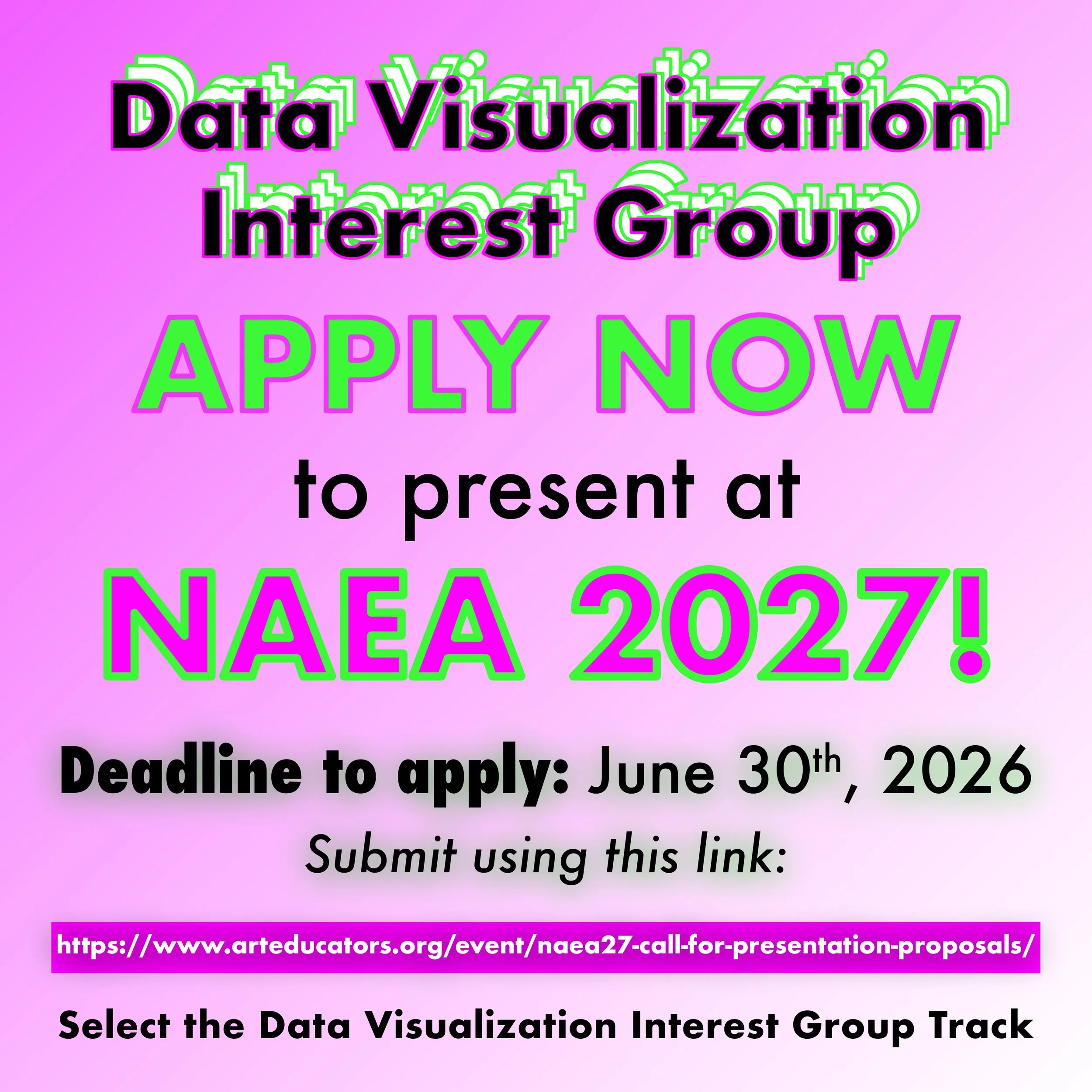
NAEA 2026 - DVIG Sessions: Call for PRESENTATIONS

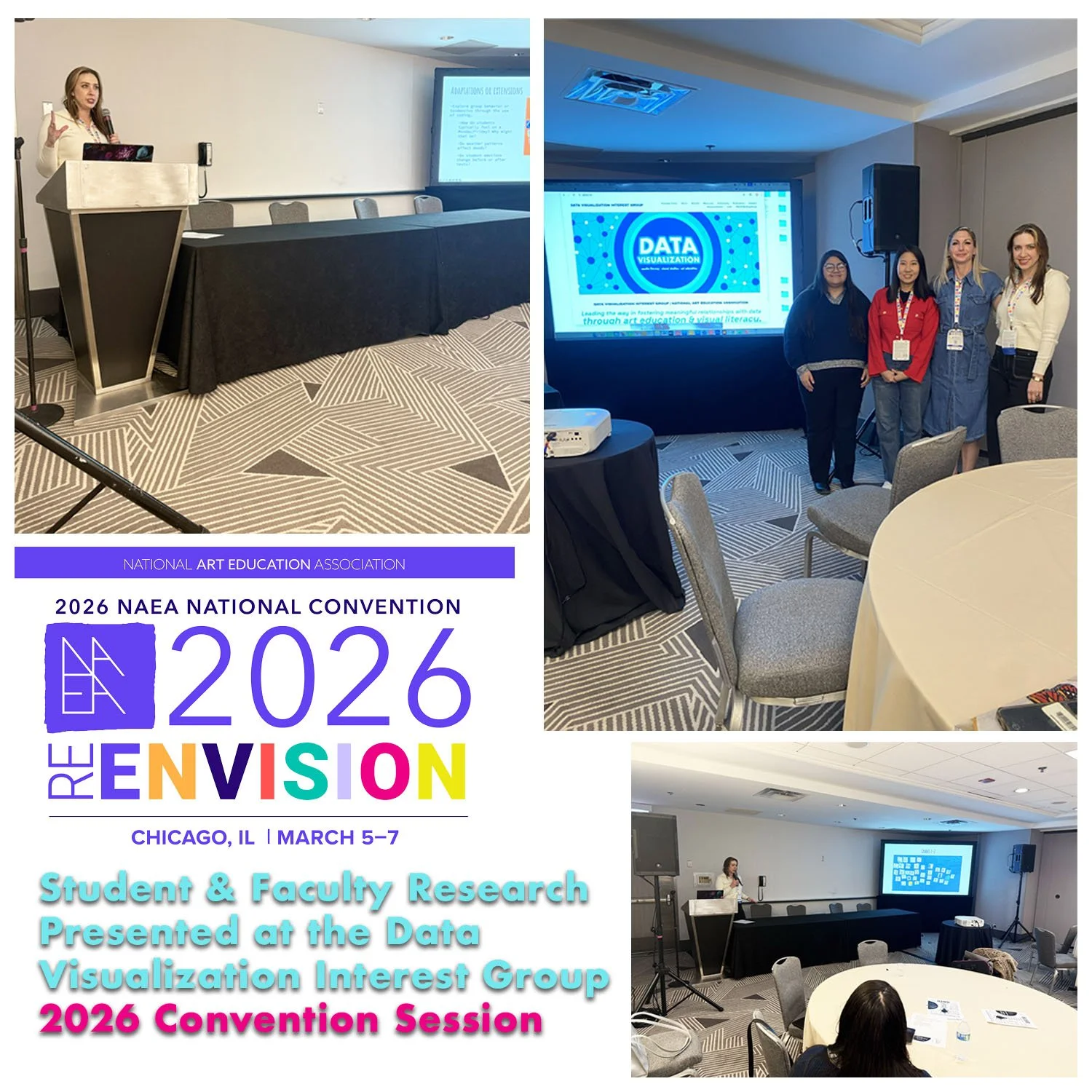
The Data Visualization Interest Group invites art educators from schools, universities, museums, and community organizations to submit proposals for our 80-minute Deep Dive sessions at the NAEA 2026 Convention.

-Proposal Guidelines-

Please respond to Prompt 1 or 2 and include 2–3 images of your data visualization work within your submission. Presentations abstracts should be approximately 300-500 words.

Submission Details:

- Deadline: December 12th, 2025

1. Data Visualization Interest Group: Research in Data Literacy

In today's data-driven world, art education research offers powerful insights into how learners interpret complex visual information. This session explores how research can reveal biases, inform meaning-making, and support data literacy-defined as the ability to read, assess, and communicate data effectively (Hannigan et al., 2023). Participants will gain: 1) an understanding of how art education research intersects with data visualization and literacy; 2) examples of research-based strategies for teaching with data; 3) insight into how learners engage with persuasive or emotional imagery; and 4) tools for fostering critical, informed visual interpretation.

This session will examine the role of data literacy in art education research, highlighting its use as both a subject of inquiry and a methodological approach. Presenters will share research that investigates how data literacy supports the interpretation of visual information, reveals bias, and empowers both teachers and learners in a rapidly evolving informational landscape. The session will feature 1–3 individuals or groups showcasing diverse studies in K–12 and higher education contexts. A concluding discussion and audience Q&A will encourage reflection on the implications of data literacy for future art education research and practice.

2. Data Visualization Interest Group: Data Literacy for K-12 Art Educators

Today's youth face constant exposure to social media, AI, and deep fakes, making image veracity and "fake news" critical concerns. Art educators must go beyond teaching visual appreciation to helping students critically analyze the cultural, ethical, and technical aspects of visual materials (ACRL, 2011). This session introduces K–12 teachers and preservice educators to data visualization as both a creative and analytical practice. Attendees will explore: 1) the connection between data visualization and data literacy, 2) strategies for teaching data literacy in art classrooms, and 3) the benefits and challenges of integrating these practices

This session will begin by defining data visualization and data literacy, highlighting their connections within art education through examples. Each of the 3–5 presenters will share how they incorporate data literacy into K– 12 art education. K–12-focused presenters will include images of student work to illustrate learning outcomes and prompt discussion on implementation successes and challenges. The session will conclude with time for audience questions and collaborative sharing, encouraging reflection on how data visualization can deepen critical thinking, creativity, and media literacy in art classrooms across grade levels.